American Revolution Summary: Causes, Timeline, Outcomes, and Key Figures
Learn the American Revolution with a clear summary of its causes, major events, key battles, outcomes, and leaders—ideal for students writing history essays.
Introduction
If you’ve been asked to write an American Revolution summary but don’t know where to begin, this guide makes it easy. It breaks down the Revolution’s main causes, key events, major battles, and long-term outcomes in a simple, student-friendly way. You’ll also find common essay topics and useful resources to support your research.
If you need help turning this summary into a full essay with strong arguments and proper referencing, you can get academic assistance through OnPoint Essays.
What Is the American Revolution?
The American Revolution was a political and military conflict between Great Britain and its thirteen colonies in North America. It grew after colonists rejected British imperial control—especially heavy taxation and laws made without colonial representation. Over time, protests escalated into open rebellion, leading to American independence and the formation of the United States of America.
The Revolution also had wider consequences: it influenced global revolutions, reshaped economies, changed political ideas, and raised unresolved tensions around slavery and equality.
Why History and Politics Students Study the American Revolution
Studying the American Revolution helps students:
- Understand the foundations of the United States (self-government, rights, constitution-making)
- Appreciate the struggle for independence and political freedom
- Build analytical skills by linking causes to outcomes
- Strengthen civic knowledge by connecting history to citizenship
- Improve research and academic writing through evidence-based arguments
If you’re writing for class, you can also use OnPoint Essays to get guidance on structure, thesis building, and citations.
Enhance your Academic Performance And Reach Your Goals
See how quick and easy it is to get an exceptional essay with minimal effort on our platform
Common Challenges Students Face
Many students struggle with:
- The complexity of events, shifting alliances, and multiple battles
- Interpreting primary sources (old language, handwriting, missing context)
- Understanding the international context (France, Spain, diplomacy)
- Avoiding bias (British vs. Patriot perspectives)
- Balancing diverse viewpoints (Patriots, Loyalists, Native Americans, enslaved people)
- Organizing essays clearly (structure, argument flow, evidence)
Useful Resources for Studying the Revolution
Here are strong resources you can use:
- Documentary series like PBS’s The Revolution
- Primary source archives (Library of Congress, U.S. National Archives)
- Podcasts (e.g., The American Revolution Podcast)
- Museums and exhibits (e.g., Museum of the American Revolution in Philadelphia)
- Educational history websites, interactive maps, and timelines
Where to Get Assignment Help
If you’re stuck on your Revolution essay—outline, thesis, research, or citations—you can get academic help from OnPoint Essays. Support can include:
- Topic selection and planning
- Essay structuring and editing
- Referencing (APA/MLA/Chicago)
- Study guidance and tutoring
What Caused the American Revolution?
The Revolution happened due to a combination of political, economic, and ideological tensions:
1) British control and restrictive laws
Britain tightened authority over colonies using laws such as the Stamp Act and Quartering Acts, which many colonists viewed as direct attacks on their liberties.
2) Taxation without representation
Colonists were taxed heavily but had no representation in Parliament. Protests increased, including the Boston Tea Party, where colonists dumped tea into Boston Harbor in response to the Tea Act.
3) Trade restrictions
Laws like the Navigation Acts limited colonial trade by forcing goods to move through British systems, benefitting British merchants and reducing colonial economic freedom.
4) Ideological conflict
Many colonists believed in Enlightenment ideals like liberty, rights, and self-rule. Britain emphasized monarchy, hierarchy, and parliamentary supremacy.
5) The French and Indian War
Britain spent huge sums fighting France, then tried to recover costs through new colonial taxes—fueling resentment.
6) Growing colonial resistance
Colonists formed assemblies and committees to coordinate resistance, share grievances, and mobilize protests.
7) Revolutionary ideas and leadership
Political writing and activism helped spread support for independence. A major example was Thomas Paine’s Common Sense, which pushed many toward separation from Britain.
For deeper analysis and essay-writing support, explore OnPoint Essays.
American Revolution Timeline (Key Events)
- 1765: Stamp Act sparks widespread protests
- 1767: Townshend Acts impose duties on imports
- 1770: Boston Massacre increases tensions
- 1773: Boston Tea Party protests the Tea Act
- 1775: Battles of Lexington and Concord begin the war
- 1776: Declaration of Independence adopted (July 4)
- 1777: British surrender at Saratoga (turning point)
- 1778: Alliance with France provides major support
- 1781: British surrender at Yorktown
- 1783: Treaty of Paris ends the war and recognizes U.S. independence
Enhance your Academic Performance And Reach Your Goals
See how quick and easy it is to get an exceptional essay with minimal effort on our platform
Outcomes of the American Revolution
1) Independence
The colonies became a sovereign nation and formed a new political identity.
2) Expansion of democratic ideas
The new United States emphasized government based on the people, not a king.
3) Individual rights
Ideas about liberty, free expression, and legal rights gained stronger support.
4) Slavery remained unresolved
Despite revolutionary rhetoric about freedom, slavery continued in North America and remained a major contradiction.
5) Global influence
The Revolution inspired other anti-colonial and revolutionary movements worldwide, including Haiti and later independence struggles elsewhere.
6) Economic change
The U.S. faced wartime debt but later expanded trade and moved toward industrial growth.
7) Political shifts and Loyalist migration
Many Loyalists left for Canada, while those who stayed sometimes faced punishment or social exclusion.
8) Britain’s empire changed direction
Britain’s loss of the colonies contributed to the shift from the “first” British Empire to the later global empire.
9) France faced financial crisis
French support for the Americans contributed to major debt, which became one factor leading toward the French Revolution.
Key Leaders of the American Revolution
- George Washington: Commander of the Continental Army; later first U.S. president
- Thomas Jefferson: Main author of the Declaration of Independence
- Benjamin Franklin: Diplomat who helped secure French support
- John Adams: Continental Congress leader; later second U.S. president
- Paul Revere: Warned colonists of British troop movements
- Samuel Adams: Organizer and Sons of Liberty leader
- Patrick Henry: Advocate of independence and colonial rights
Famous Battles of the Revolution
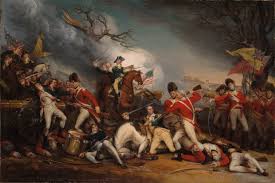
- Lexington and Concord (1775): First major military engagement
- Bunker Hill (1775): British victory, but showed colonial strength
- Trenton (1776): Key Continental Army victory
- Saratoga (1777): Turning point that helped bring France into the war
- Yorktown (1781): Final major battle leading to British surrender
Why Did the Americans Win?
Several reasons explain the American victory:
- They fought on familiar land and had stronger local support
- They used flexible tactics suited to their environment
- France provided decisive military and financial support
- Spain and other powers also weakened Britain’s war position
Common American Revolution Essay Topics
- Causes of the American Revolution (political, economic, ideological)
- Key figures and leadership roles
- Major battles and turning points
- The Stamp Act and resistance movements
- Slavery and its contradictions within the Revolution
- Religion and colonial society leading up to independence
Need help turning any of these into a strong essay outline? Use OnPoint Essays.
Conclusion
The American Revolution reshaped not only the future of the United States but also global politics and revolutionary movements. For a strong essay, focus on clear structure: introduce the conflict, explain causes, map the timeline, analyze outcomes, and support arguments with evidence.
If writing still feels overwhelming, you can get structured support—research help, outlines, editing, or full essay guidance—through OnPoint Essays.
Enjoyed this article?
Subscribe to our newsletter for more insightful content, academic tips, and exclusive updates.
About the Author
Anakin Harrison
PhD, English Literature